
10 Tips for hair and cosmetics that every portrait photographer should be aware of
- Wilsonloyfernandes

- Sep 16, 2022
- 4 min read
Updated: Oct 11, 2022

Credit: Zahrin Lukman
In addition to improving your photographs, the appropriate hair and cosmetics may also help you save time during post-production. Although it's always a pleasure to work with a makeup artist (MUA) or hair stylist, it's not always possible—especially when you're first getting started. It pays to be familiar with the foundations even if you wind up working with a professional in the future.
Additionally, experimenting with hair and cosmetics may serve as a never-ending source of inspiration and concepts for next projects. We compiled this practical list of do-it-yourself advice for fashion and portrait photographers to use regularly to keep costs down. Start out basic and work your way up since it's ideal to keep hair and makeup simple and learn a few go-to looks.
The first step in each shoot is to establish basic safety procedures. As usual, refrain from reusing items and never use your hands in place of a just-cleaned brush. Make an additional effort to make everyone feel comfortable by doing your study on correct hygiene techniques depending on the things you use.
1-Work on yourself first

Credit: Apostolos Vamvouras
Although it may seem obvious, try everything out on your own before trying it out on a model. Search for Online lessons, and enrol in some programmes. Try to reproduce the similar look at home with some inspiration images.
It would be ideal if you could recruit friends and relatives to serve as models. Alternately, arrange test shoots with models who are at a similar stage of their careers to you; you might be able to work out a "time-for-prints" arrangement. You'll feel more at ease going into any picture shoot the more familiar you are with various varieties of skin and hair.
2-To prepare, ask your model

Credit: Nati Melnychuk
The night before the shoot, encourage your model to hydrate and exfoliate since successful makeup begins with a clean canvas. In the days preceding the photo session, advise your model to refrain from over-washing, over-styling, or using heat on their hair for the best results. Any surplus product may be removed with a thorough shampoo the night before, and for ends that seem healthy, you can also recommend getting them clipped.
3- Ask for input

Credit: Alena Plotnikova
Don't be hesitant to ask your models for their thoughts and comments. You may know what looks nice on camera, but they also know what makes them feel confident. To appear on camera, photo shoot makeup is typically more obvious than everyday makeup, although you can still draw aesthetic cues from your model. Take use of their knowledge since they are aware of what suits their skin and hair best.
4-Utilize a primer

Credit: Kelsey Curtis
You should use primer the day of the event before applying foundation since it will seal in the moisture and provide a natural "blurring" appearance. For close-up photography, this step is crucial for limiting pore visibility and producing an even surface.
5-Watch out for flyaways

Credit: Scandinavian Biolabs
Consider applying a serum to tame stray hairs that appear out of place since they can become noticeable on camera even if they aren't noticeable in real life. Naturally, strategically placed wisps of hair may enhance a photograph; just make sure they are positioned with thought and that the lighting is appropriate for the scene.
6-Use natural light as a tip

Credit: Victoria Priessnitz
When applying makeup, natural light is preferable. Find a window with lots of indirect light and turn off any inside lights. Instead of harsh overhead lights, which may cast distracting shadows, soft, natural light will help you get a better sense of how everything appears and interacts with one another. Avoid lighting that has any colour cast at all costs (yellow and pink lighting are popular).
If you can work with your model to make it work, natural light also works nicely for the actual picture shoots. Around sunrise, the "golden hour," may be particularly attractive.
7-Move matte

Credit: Laura Chouette
For picture sessions, stay away from anything that will shine on camera. Shimmery cosmetics may be OK for daily use. Choose a matte foundation that flatters your model, then apply and blend any necessary concealer, finishing with a mattifying translucent powder for a shimmer-free finish.
This advice is exclusively for cosmetics, not hair! When styling hair for photographs, the reverse frequently holds true, therefore you should stay away from mattifying products. Instead, take into account items that enhance that lovely, healthy shine.
8- Use hairspray sparingly.
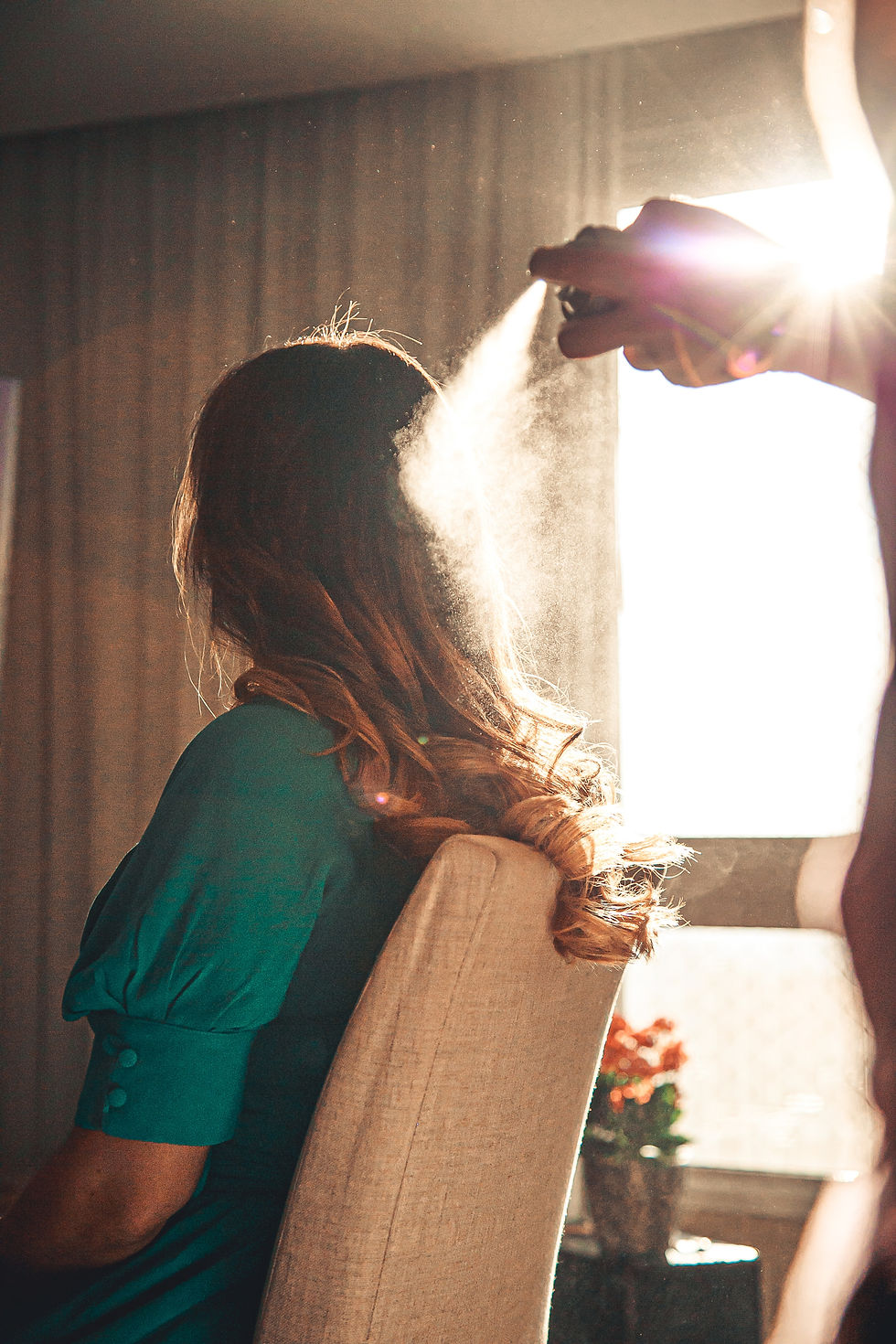
Credit: Josue Verdejo
Although hairspray is a necessary component of any style kit, a little bit goes a long way. If you use too much, your hair will seem dry and you will clearly have product buildup. After styling the hair, use a small amount and hold it well away from the model's head.
9-Incorporate colour

Credit: Svetlana-Pochatun
You might need to use brighter colours than you would in ordinary life as bright light, especially flash, might wipe out your model's natural hue. This is not to mean that the colours should seem odd; rather, emphasise the qualities and attributes already present in your figure.
Choose a blush colour that closely resembles their natural flushed appearance, and apply more than one swipe. When choosing eye makeup, keep in mind the colour of their eyes (e.g., pinks with green eyes, or soft oranges with blues). To emphasise the eye, many professional makeup artists will also use three colours (a highlighter, a midtone, and a deeper tone).
10-Adapt as necessary

Credit: Maxim Tolchinskiy
When you start filming, the style process doesn't stop, and you might need to make adjustments later on. Shoot connected if you can so you can see how everything looks and fix any problems right away. You'll need to make more adjustments to keep things polished as the shoot goes on longer. As usual, maintain open channels of communication and have a cooperative attitude. Your model can have suggestions for edits or enhancements to make the pictures stand out.


Comments